An HMO (Health Maintenance Organization) works differently from a standard health insurance policy, and the terms that come with it, PCP, gatekeeper, referral, network, reflect that different structure. This guide breaks down what you’ll actually encounter as an HMO member, in plain language, so you know how to use your card and avoid a denied or delayed claim.
- What Is an HMO
- Network (Accredited Providers)
- Primary Care Physician (PCP)
- Gatekeeper
- Referral
- Letter of Authorization (LOA)
- Capitation
- Maximum Benefit Limit (MBL)
- Availment
- Exclusions
- Pre-Existing Conditions
- Dreaded vs. Non-Dreaded Conditions
- Out-of-Network / Emergency Care
- Reimbursement Claim
- Principal Member and Dependents
- Accreditation Lapse
- Choosing an HMO Plan
- HMO vs. Health Insurance
- FAQ
- Final Thoughts
What Is an HMO
A Health Maintenance Organization (HMO) is a healthcare plan that delivers care through a specific network of accredited doctors, clinics, and hospitals, rather than reimbursing you for care from any provider you choose. In exchange for this narrower network, HMO plans usually cost less than traditional health insurance and often skip deductibles entirely.
Many HMO plans in the workplace are provided as an employee benefit, though individual and family HMO plans are also widely available. If you’re comparing this to a standalone policy, our guide to health insurance terms covers how traditional coverage works.
Network (Accredited Providers)
Your HMO’s network is the specific group of clinics, hospitals, and specialists it has partnered with. Staying within this network is what makes your HMO card usable for cashless treatment. Stepping outside it usually means paying out of pocket, sometimes with no reimbursement at all.
Before enrolling, check whether your preferred hospital and doctors are included, since networks vary significantly between HMO providers, especially across cities or regions.
Primary Care Physician (PCP)
Your PCP is the doctor assigned or chosen as your first point of contact for almost any health concern. They handle routine visits themselves and decide whether you need to see a specialist. This is one of the biggest structural differences from regular health insurance, where you can typically go straight to a specialist.
You can usually request to change your assigned PCP if the fit isn’t working, though the process and timing depend on your specific HMO provider.
Gatekeeper
“Gatekeeper” is the informal term for the role your PCP plays. Since specialist visits generally require the PCP’s referral first, the PCP effectively controls, or “gatekeeps,” your access to further care within the network.
This system helps HMOs manage costs and reduce unnecessary specialist visits, though it can also mean a short delay before you’re cleared to see a specialist for a non-urgent concern.
Referral
A referral is the formal document or approval your PCP issues that allows you to consult a specialist or undergo certain procedures within the network. Without one, your HMO may deny the claim entirely, even if the specialist is within the network.
Let’s say your PCP suspects a heart issue and needs a cardiologist’s opinion. The PCP issues a referral, which you then present to the cardiologist’s clinic to have the visit covered under your HMO benefits.
Letter of Authorization (LOA)
Before a hospital confinement or major procedure, your HMO issues a Letter of Authorization (LOA) confirming it will cover the cost up to a specific amount. This is what allows the hospital to admit you without requiring payment upfront.
For planned procedures, request your LOA a few days ahead of time. For emergencies, most HMOs allow you to secure it within 24 to 48 hours of admission instead, so treatment isn’t delayed.
Capitation
Capitation is the arrangement behind the scenes between your HMO and its network doctors. Instead of billing per visit, a PCP receives a fixed monthly fee for each member assigned to their care, whether or not that member visits during the month.
You won’t interact with capitation directly as a member, but it explains why HMOs can offer lower premiums than plans that pay providers per service.
Maximum Benefit Limit (MBL)
The Maximum Benefit Limit is the total amount your HMO will pay for covered services within a policy year. Some plans set a single overall limit, while others break it down by category, room and board, doctor’s fees, diagnostics, and so on.
Let’s say your MBL is 500,000 in your local currency and a hospitalization runs up charges of 600,000. You would typically be responsible for the excess 100,000, unless you carry supplemental coverage.
Availment
Availment simply means using your HMO benefits, whether for a consultation, lab test, or hospital confinement. Some plans track your remaining MBL as a running “availment balance” that decreases with each claim throughout the year.
Checking your remaining availment balance partway through the year can help you gauge how much coverage you have left before your MBL resets.
Exclusions
Exclusions are conditions or services your HMO will not cover under any circumstance. Common exclusions include cosmetic procedures, certain pre-existing conditions during an initial period, and treatments not deemed medically necessary by the plan.
Always review this section of your member handbook closely, since it’s often where members are caught off guard, especially with dental, vision, or mental health services that may only be partially covered.
Pre-Existing Conditions
A pre-existing condition is any illness or health issue you had, were diagnosed with, or showed symptoms of before your HMO coverage started, common examples are diabetes, hypertension, or asthma. Many HMO plans place a waiting period, often 6 to 12 months, before these conditions are covered, and some plans exclude certain pre-existing conditions entirely.
Declare any known condition honestly during enrollment. An undisclosed pre-existing condition is one of the most common reasons a related claim gets denied later on.
Dreaded vs. Non-Dreaded Conditions
HMO plans often separate illnesses into two categories that affect how coverage applies. Dreaded conditions are serious, high-cost illnesses specifically named in your policy, commonly cancer, stroke, heart attack, or kidney failure. These often come with a longer waiting period and sometimes a lower Maximum Benefit Limit than the rest of your plan.
Non-dreaded conditions cover everything else, from infections to minor injuries to common illnesses, and are usually available from a much earlier point in your membership, sometimes immediately.
Check your plan’s specific list of dreaded conditions rather than assuming, since the exact illnesses named and the length of the waiting period vary between HMO providers.
Out-of-Network / Emergency Care
Since HMOs are built around their specific network, care from an out-of-network provider is often not covered at all, with one major exception. Emergencies are typically covered regardless of network status, since the priority is getting you stabilized first.
Even in emergencies, most HMOs require you to notify them within a set window, often 24 to 48 hours, and may require transfer to a network hospital once you’re stable.
Reimbursement Claim
If you’re treated outside your network, especially during a covered emergency, you may need to pay upfront and file a reimbursement claim afterward. This involves submitting official receipts, medical records, and a completed claim form within your HMO’s deadline, often 30 to 90 days from treatment.
Keep every receipt and document from the encounter. Missing paperwork is one of the most common reasons reimbursement claims get delayed or denied.
Principal Member and Dependents
The principal member is the person the HMO plan is primarily issued to, often through an employer. Dependents, typically a spouse or children, can usually be added under the same plan, sometimes with their own separate MBL rather than sharing the principal member’s limit.
If you’re adding dependents, confirm whether each one gets a full individual MBL or a shared family limit, since this significantly affects how much protection the plan actually offers per person.
Accreditation Lapse
Occasionally, a hospital or clinic that was previously part of your HMO’s network loses its accreditation, or a new facility hasn’t been accredited yet. This can happen without much notice to members.
It’s worth confirming a provider’s current accreditation status right before a visit, rather than relying on an old printed list or a prior visit months earlier.
Choosing an HMO Plan
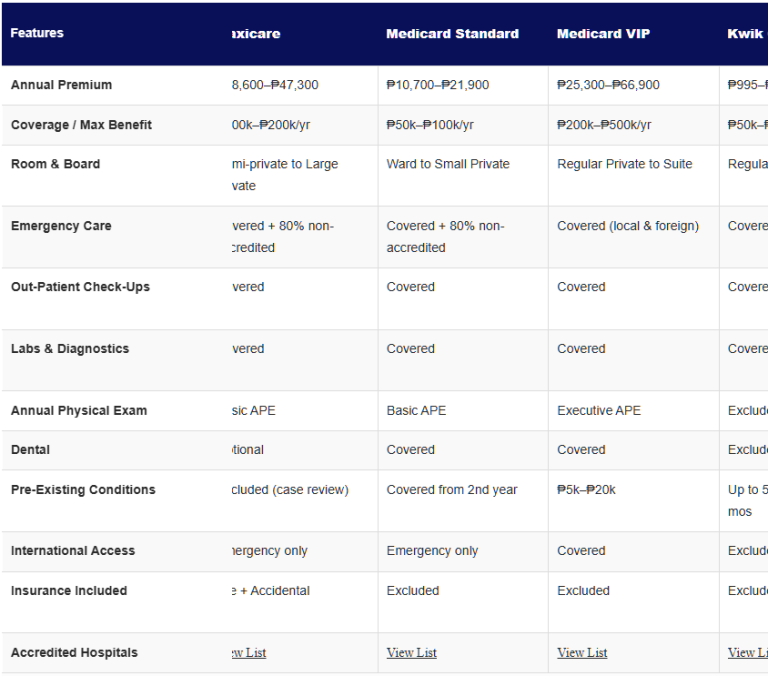
Once you understand these terms, the next step is comparing actual plans. If you’re weighing your options in the Philippines specifically, our guide to HMO options in the Philippines breaks down providers, coverage, and pricing side by side.
If a full HMO membership feels like more than you need right now, a prepaid HMO can be a lighter, lower-cost way to access a network of clinics for routine and preventive care.
HMO vs. Health Insurance
The core difference comes down to structure. An HMO delivers care through a managed network with a PCP directing referrals, usually with lower premiums and simpler cashless transactions. Traditional health insurance offers more freedom to choose providers, sometimes including out-of-network options, but often comes with deductibles, coinsurance, and higher premiums.
Many people carry both, using an HMO for everyday and preventive care while relying on a separate health insurance policy for larger benefit limits during a major illness. For the full breakdown of insurance-specific terms like deductibles and coinsurance, see our health insurance terms guide.
FAQ
Can I see a specialist without a referral?
Usually not, except in a genuine emergency. Visiting a specialist without your PCP’s referral often means the visit won’t be covered under your HMO benefits.
What happens if I exceed my Maximum Benefit Limit?
Any cost beyond your MBL becomes your responsibility, unless you have supplemental insurance to cover the difference. This is why many people pair an HMO with a separate health insurance policy for bigger financial protection.
Is emergency care always covered, even outside the network?
Generally yes, but you’ll usually need to notify your HMO within a specific window and may be required to transfer to a network hospital once you’re stabilized.
Can I change my Primary Care Physician?
In most cases yes. The process varies by provider, but it’s usually a straightforward request through your HMO’s member service channels.
Final Thoughts
HMO terminology exists mainly to explain one thing, how your access to care is managed and by whom. Once you understand your role in relation to your PCP, your network, and your Maximum Benefit Limit, using your HMO card becomes far less confusing, and you’ll know exactly what to do when a claim doesn’t go smoothly.
Related Articles

HMO Terms Explained: PCP, Referrals, Network & More

Health Insurance Terms Explained: Accredited Hospitals, Claims, Limits & More

KwikCare Insurance: Affordable HMO Plans Starting At ₱995

Prepaid Health Cards in the Philippines: Complete Comparison Guide
HMOs in the Philippines: 2026 Comparison Guide