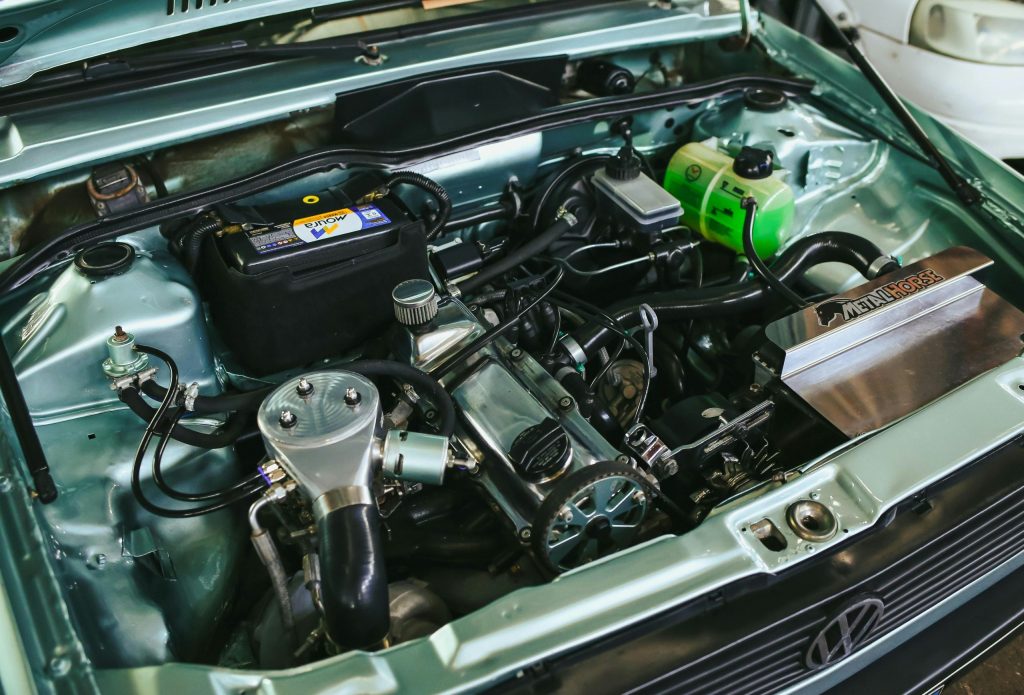
Changing a vehicle’s engine is more than just a mechanical upgrade, it’s a legal modification that must be properly documented with the Land Transportation Office (LTO). Whether you replaced a damaged engine or upgraded to a more powerful one, you are required to update your vehicle’s registration records to reflect the new engine number.
This process exists to protect both vehicle owners and the public. It ensures that engines are not stolen, vehicles remain roadworthy, and ownership records stay accurate. Skipping this process may seem tempting, but it can lead to serious penalties, including fines and even vehicle impoundment.
Why You Need to Register an Engine Change
When you swap your engine, the engine number on your Certificate of Registration (CR) becomes outdated. Since this number is one of the primary identifiers of your vehicle, failing to update it creates a mismatch in official records.
In practical terms, this can cause problems when:
- Renewing your registration
- Selling your vehicle
- Passing checkpoints or inspections
- Filing insurance claims
More importantly, the LTO requires that any engine replacement be reported within a limited period. This ensures that the new engine is verified and legally recorded.
Requirements You Need to Prepare
Before heading to any office, it’s important to understand that the process involves multiple agencies and verification steps. The more complete your documents are, the smoother your experience will be.
Core Documents
These are the standard documents almost all applicants must provide:
- Original Certificate of Registration (CR) of the vehicle and the engine source
- Latest Official Receipt (OR) of the vehicle and the engine source
- Deed of Sale of Motor Vehicle Engine
- Valid ID of the engine owner with 3 signatures
- Valid ID of the vehicle owner with 3 signatures
- Joint affidavit of owner and mechanic
- Valid ID of the mechanic with 3 signatures
- PNP-HPG clearance for the change of engine
- LTO inspection
The key idea here is simple: LTO wants to verify both the legality of the engine and the identity of the vehicle it’s being installed in.
Step-by-Step Process Explained
Processing a change engine isn’t done in just one office, it’s a multi-step workflow involving inspection, verification, and approval. Understanding each step will help you avoid delays.
1. Secure Legal Proof of the Engine
Everything starts with the engine itself. Before installation, or at least before registration, you should already have documents proving where the engine came from.
LTO places a strong emphasis on verifying that engines are not sourced from carnapped (stolen) vehicles. Even if you purchased the engine in good faith, missing or incomplete documentation can immediately lead to delays, rejection of your application, or even legal complications.
To avoid these issues, take time to verify the legitimacy of the engine before finalizing the purchase. One key detail that many buyers overlook is the status of the source vehicle. The engine you are acquiring must come from a properly registered vehicle with:
- An updated Certificate of Registration (CR)
- A valid and latest Official Receipt (OR)
It’s important to understand that the LTO requires the source vehicle to be fully registered and up to date before its engine can be legally transferred. This means that if the previous owner has unpaid registration dues, penalties, or lapses, these must be settled first.
In practical terms, this can affect you as the buyer. If the seller has not updated the registration, you may end up shouldering additional costs just to make the engine eligible for transfer. Because of this, it’s highly advisable to:
- Confirm the registration status of the source vehicle in advance
- Ask for copies of CR and OR before agreeing to buy
- Clarify with the seller who will handle any unpaid dues
By doing this early, you avoid unexpected expenses and ensure that your change engine application will proceed smoothly once you reach the LTO stage. I didn’t know this when I changed my car’s engine, and I had to pay an extra ₱6,100 just to have my vehicle properly registered.
2. Prepare and Notarize the Deed of Sale of Motor Vehicle Engine
Once you’ve verified that the engine is legally sourced, the next step is to formalize the transaction through proper documentation. This means securing a Deed of Sale specifically for the motor vehicle engine.
This document serves as your official proof that ownership of the engine has been transferred to you. Without it, you won’t be able to proceed with your application.
It’s important to understand that this is not the same as a Deed of Sale of a Motor Vehicle. The LTO requires a document that clearly states the sale of the engine itself, including its engine number and relevant details. Submitting the wrong type of deed is a common mistake and will result in rejection.
To make your document valid and acceptable, you need to:
- Have the Deed of Sale of Motor Vehicle Engine properly filled out
- Ensure all engine details (engine number, description, etc.) are accurate
- Have the document notarized
- Secure a photocopy of the seller’s valid government-issued ID
- Make sure the ID includes at least three specimen signatures
Before proceeding, double-check that all information in the deed matches the engine and supporting documents. Even small discrepancies can cause delays when you submit your application.
To make things easier, you can use a ready-made template.
3. Execute a Joint Affidavit of Owner and Mechanic
After the engine has been successfully installed, the next step is to formally document the modification through a Joint Affidavit of Owner and Mechanic. This is a required document by the LTO to certify that the engine replacement was properly completed.
The affidavit must be executed between:
- The vehicle owner (the registered owner of the vehicle), and
- The mechanic or repair shop who performed the engine installation
It’s important to be clear about roles here. The “owner” in this document refers to the vehicle owner, not the seller of the engine. The mechanic, on the other hand, serves as the professional who confirms that the installation was done correctly.
This affidavit essentially declares that the engine swap has been completed, identifies the new engine installed, and confirms that the work was properly executed
To ensure the document is valid and accepted, make sure to:
- Have the affidavit properly notarized
- Verify that all vehicle and engine details are accurate and consistent
- Attach a photocopy of the mechanic’s valid government-issued ID
- Ensure the ID includes at least three specimen signatures
The mechanic’s ID and signatures are required to validate the identity of the person who performed the work, adding credibility to the affidavit.
You can prepare this document using the sample template below. However, many notaries or lawyers can also draft the affidavit for you to ensure it meets all legal and formatting requirements.
4. Submit Documents to LTO for Confirmation and Verification
Once all your documents are prepared, the next step is to submit photocopies of these requirements to the LTO for initial verification.
At this stage, you are not yet completing the full change engine process. Instead, the LTO will conduct a records confirmation to validate the legitimacy of the engine’s source and supporting documents.
Documents to Submit
Prepare photocopies of the following:
- OR/CR of the source vehicle (engine donor vehicle)
- Deed of Sale of Motor Vehicle Engine
- OR/CR of your vehicle (if registered in another LTO office)
- Vendor’s (seller’s) valid ID with three specimen signatures
- Vendee’s (your) valid ID with three specimen signatures
- Joint Affidavit of Vehicle Owner and Mechanic
- Mechanic’s valid ID with three specimen signatures
After submission, your local LTO office will not immediately approve your application. Instead, they will initiate a verification process by coordinating with the original LTO office where the source vehicle’s CR was issued.
This is done to confirm that the CR is authentic, verify that the vehicle exists in official records, check that the engine details match their database, and ensure there are no legal issues tied to the source vehicle.
Unlike other steps, this stage can take significantly longer because it depends on coordination between LTO offices. Typical waiting time is several weeks to around 1 month. In some cases, it may be faster or slower depending on response time. The delay usually comes from how quickly the originating LTO office can review and reply to the request.
5. Secure PNP-HPG Clearance After LTO Confirmation
Once your documents have been verified, the LTO will notify you, usually via text, that you can return to claim your confirmation certificate. This document allows you to proceed with your application at the Philippine National Police Highway Patrol Group (PNP-HPG).
LandBank Payment
You will need to submit photocopies of the same documents from the previous step, along with the LTO confirmation certificate. After checking your documents, the HPG office will issue a LandBank payment slip for the required fees, typically ₱300 for change engine processing and ₱350 for physical inspection. These payments require a Special Bank Receipt (SBR), so not all Land Bank of the Philippines branches can process them. It’s best to go directly to a branch that handles this type of transaction to avoid delays. Prepare 3 copies of the payment slip before heading back to the PNP-HPG office.
Around Batangas area, Landbank Batangas City, Landbank Sto. Tomas, and Landbank Calamba accepts payment.
It’s also important to note that not all PNP-HPG offices can process and print the clearance on-site. Some offices only forward documents to larger processing hubs, which may result in additional fees and longer waiting times. Because of this, going directly to a main processing office can save both time and money.
PNP-HPG Batangas City does not directly process HPG clearance. They only route your docs to PNP-HPG Canlubang for an additional fee. You can opt to go straight to Canlubang if you are in a rush or want to reduce costs.
PNP-HPG Inspection
After payment, you will return to the HPG office for the physical inspection. This includes stencil procedures for the engine and chassis numbers (usually with a small fee of around ₱50–₱100), as well as photo documentation of you with your vehicle and an HPG officer as proof of inspection.
The clearance is typically released the next working day, although in some cases you may request faster processing. You might encounter offers to “rush” the release for an additional fee (around ₱500), but these are not official charges, so it’s best to proceed through proper channels. Completing this step means your engine has passed both document verification and physical inspection, allowing you to move forward with final processing at the LTO.
6. Final LTO Inspection and Release of Updated CR
After securing your clearance, return to your LTO office and proceed with the final inspection process. At this stage, your vehicle will undergo another round of inspection, which typically includes verification of the engine and chassis numbers, as well as stencil procedures.
Once the inspection is completed, you will be asked to fill out the necessary forms and have them signed by the Motor Vehicle (MV) Inspector. Make sure all details are accurate before proceeding, as this will be part of your final submission.
You will then submit the original copies of all your documents, including those from the previous steps, along with the inspection report to the MV Evaluator. They will review and process your application, after which you will be called for payment.
Fees at this stage are usually minimal (typically less than ₱500), unless there are penalties such as unpaid registration dues for either the vehicle or the source engine.
After payment, forward your documents to the releasing window and wait for your name to be called. You will be issued a temporary Certificate of Registration (CR), while the official copy is being processed. The LTO will notify you via text once the original CR is ready for release.
Completing this step finalizes your change engine application, with your new engine now officially recorded in your vehicle’s registration.
Summary of Steps and Fees for LTO Change Engine
| Steps | Fees and Notes |
|---|---|
| 1. Verify and secure the engine’s legality Ensure the engine comes from a properly registered source vehicle with updated OR/CR. | Free |
| 2. Prepare and notarize the Deed of Sale of Motor Vehicle Engine This must specifically refer to the engine (not the whole vehicle) and include the seller’s valid ID with signatures. | Notarial fees vary. Based on my personal experience: – Deed of Sale of Motor Vehicle Engine: ₱500 – Documentary Stamp: ₱45 |
| 3. Execute a Joint Affidavit of Change Engine Signed by the vehicle owner and the mechanic, with the mechanic’s ID and signatures attached. | Notarial fees vary. Based on my personal experience: – Joint Affidavit of Owner and Mechanic: ₱300 – Documentary Stamp: ₱45 |
| 4. Submit documents to LTO for confirmation LTO will verify the authenticity of the source vehicle’s CR with the originating office (this may take weeks). | Free |
| 5. Secure PNP-HPG clearance Submit documents, pay fees, undergo stencil and inspection, and obtain clearance. | – Change Engine: ₱300 – Physical Inspection: ₱350 – Stencil: ₱50 – ₱100 – Rush Processing: Should be free but you may be asked to pay ₱500 |
| 6. Return to LTO for final inspection and processing Vehicle inspection, document evaluation, payment, and release of temporary CR. | Typically less than ₱500 unless your vehicle or the source engine has unpaid registration dues |
Final Insight
The process is largely about verification and compliance, proving that your engine is legally sourced and properly installed. While it may take time (especially during LTO confirmation), completing it correctly ensures your vehicle remains fully legal, roadworthy, and hassle-free for future transactions.
Related Articles

LTO Transfer Ownership: Complete Process and Fees [2026]
LTO Change Engine: Complete Process and Fees [2026]